
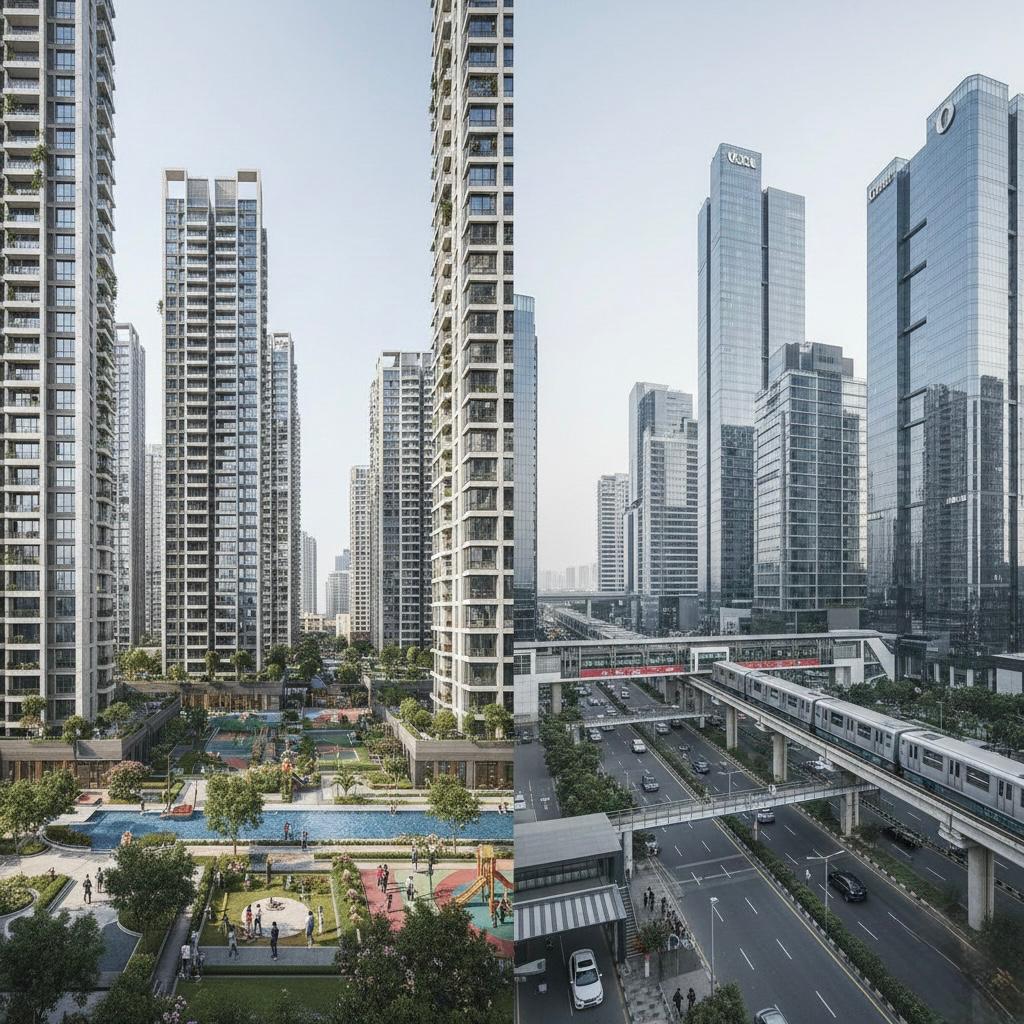
Gurgaon has evolved into one of India’s most lucrative real estate markets. With Fortune 500 companies, modern infrastructure, and steady demand from working professionals, the city offers compelling opportunities for property investors.
But here’s the question most investors face: Should you buy residential or commercial property in Gurgaon?
Both asset classes have their merits. Your choice depends on budget, risk tolerance, and whether you prioritize steady rental income or long-term capital appreciation.
Let’s break down the core differences to help you make an informed decision in 2026.
1. Entry Cost and Budget Considerations
Residential Property Investment Gurgaon
Residential properties remain more accessible for first-time investors. A 2BHK apartment in sectors like Sector 37D, Sector 89, or New Gurgaon typically ranges from ₹60 lakh to ₹1.2 crore, depending on location and developer reputation.
Premium projects in Golf Course Road or DLF Phase 5 command higher prices—often ₹2 crore and above—but offer stronger appreciation potential.
Home loans are widely available with competitive interest rates, often between 8.5% to 9.5%. Banks offer higher loan-to-value ratios (up to 80–90%) for residential purchases, making it easier to leverage your capital.
Commercial Real Estate Gurgaon
Commercial properties require significantly higher upfront investment. A small retail shop or office space in micro-markets like Sohna Road or Golf Course Extension starts at ₹50 lakh to ₹80 lakh.
For Grade-A office spaces in Cyber City or Udyog Vihar, expect to invest ₹1.5 crore or more.
Financing is trickier. Commercial property loans come with lower loan-to-value ratios (typically 60–70%) and higher interest rates. This means you’ll need more equity upfront.
Winner for Budget Flexibility: Residential properties are easier to enter and finance.
2. Rental Yield and Cash Flow
Residential Rental Returns
Gurgaon’s residential rental yield averages between 2.5% to 3.5% annually. In high-demand localities like Sector 54, Sector 55, or near major employment hubs, yields can touch 4%.
Rental income is relatively stable. Professionals and families prefer long-term stays, which means a predictable monthly cash flow. However, rental escalations are moderate—typically 5–10% every few years.
Commercial Leasing Returns
Commercial properties offer significantly higher rental yields—often between 6% to 9% per annum. Retail spaces, office units, and co-working setups attract corporate tenants willing to pay premium rents.
Lease agreements are typically longer (3–9 years) with built-in annual escalations of 10–15%. This creates stronger cash flow compared to residential properties.
However, finding quality tenants can take time, especially during economic slowdowns. Vacancy periods can stretch for months.
Winner for Income Focus: Commercial real estate delivers superior rental yield and cash flow.
3. Risk, Vacancy, and Maintenance
Residential Property Risks
Tenant turnover is more frequent in residential properties. Families relocate, job changes happen, and renters move on. This means periodic vacancy and the hassle of finding new tenants.
Maintenance costs are moderate. Residential societies typically handle common area upkeep through maintenance charges, which are passed on to tenants or owners.
Legal disputes are less common, and rental agreements are straightforward.
Commercial Property Risks
Commercial real estate faces higher vacancy risk. During economic downturns or when businesses consolidate, finding tenants becomes difficult. A vacant commercial property generates zero income while still incurring costs.
Maintenance responsibilities are often heavier. Depending on the lease structure, owners may need to handle repairs, renovations, and compliance with commercial building standards.
However, once leased to a reputable tenant—especially multinational corporations or established brands—commercial properties offer stability and fewer day-to-day management issues.
Winner for Lower Risk: Residential properties are easier to manage and lease consistently.
4. Capital Appreciation Potential
Residential Property Growth
Residential properties in Gurgaon have shown steady appreciation over the past decade. Areas like New Gurgaon and Dwarka Expressway have delivered 8–12% annual growth in well-planned projects.
However, appreciation is highly location-dependent. Oversupplied micro-markets may see sluggish growth, while premium sectors continue to outperform.
The residential segment benefits from continuous demand driven by Gurgaon’s expanding workforce and migration patterns.
Commercial Real Estate Appreciation
Commercial properties can deliver explosive capital gains—but they’re cyclical. During economic booms, prime office spaces and retail hubs in areas like Cyber City or MG Road appreciate rapidly.
But commercial real estate is more sensitive to economic cycles. During slowdowns, property values can stagnate or even correct.
Long-term investors who hold through cycles often see strong appreciation, especially in Grade-A developments backed by organized developers like DLF and M3M.
Winner for Appreciation: Both have potential, but residential offers steadier growth while commercial can spike higher during favorable cycles.
5. Which Option Suits Which Investor?
Choose Residential If:
- You’re a first-time investor with limited capital
- You prefer lower risk and steady, predictable returns
- You want easier financing options
- You’re looking for an asset that’s easier to liquidate
- You plan to eventually use the property yourself
Choose Commercial If:
- You have higher capital and can afford a larger upfront investment
- You prioritize rental yield over appreciation
- You’re comfortable with longer vacancy periods
- You have a long-term investment horizon (7–10 years)
- You want to diversify your real estate portfolio
For High-Net-Worth Investors:
Consider splitting your allocation. A mix of residential and commercial properties balances income stability with growth potential.
Market Context: Gurgaon’s Unique Advantage
Gurgaon’s strength lies in its corporate ecosystem. The city hosts over 250 Fortune 500 companies, creating sustained demand for both residential and commercial real estate.
Infrastructure developments—like the Dwarka Expressway, Northern Peripheral Road, and upcoming metro extensions—continue to unlock new micro-markets.
Organized developers are delivering quality projects with proper approvals, reducing investor risk compared to earlier decades.
This combination makes Gurgaon property investment returns among the most attractive in the National Capital Region.
Final Verdict: What Should You Invest In?
There’s no universal answer. The right choice depends entirely on your financial goals.
Residential properties offer accessibility, lower risk, and steady appreciation. They’re ideal for conservative investors or those entering real estate for the first time.
Commercial real estate delivers superior rental yields and can generate significant long-term wealth—but requires more capital, patience, and risk tolerance.
Both asset classes have proven their worth in Gurgaon’s dynamic market. The key is aligning your investment with your risk appetite, time horizon, and return expectations.
The right investment depends on your risk appetite and return expectations. If you’re deciding between residential and commercial options in Gurgaon, speak with our advisors for objective guidance.