
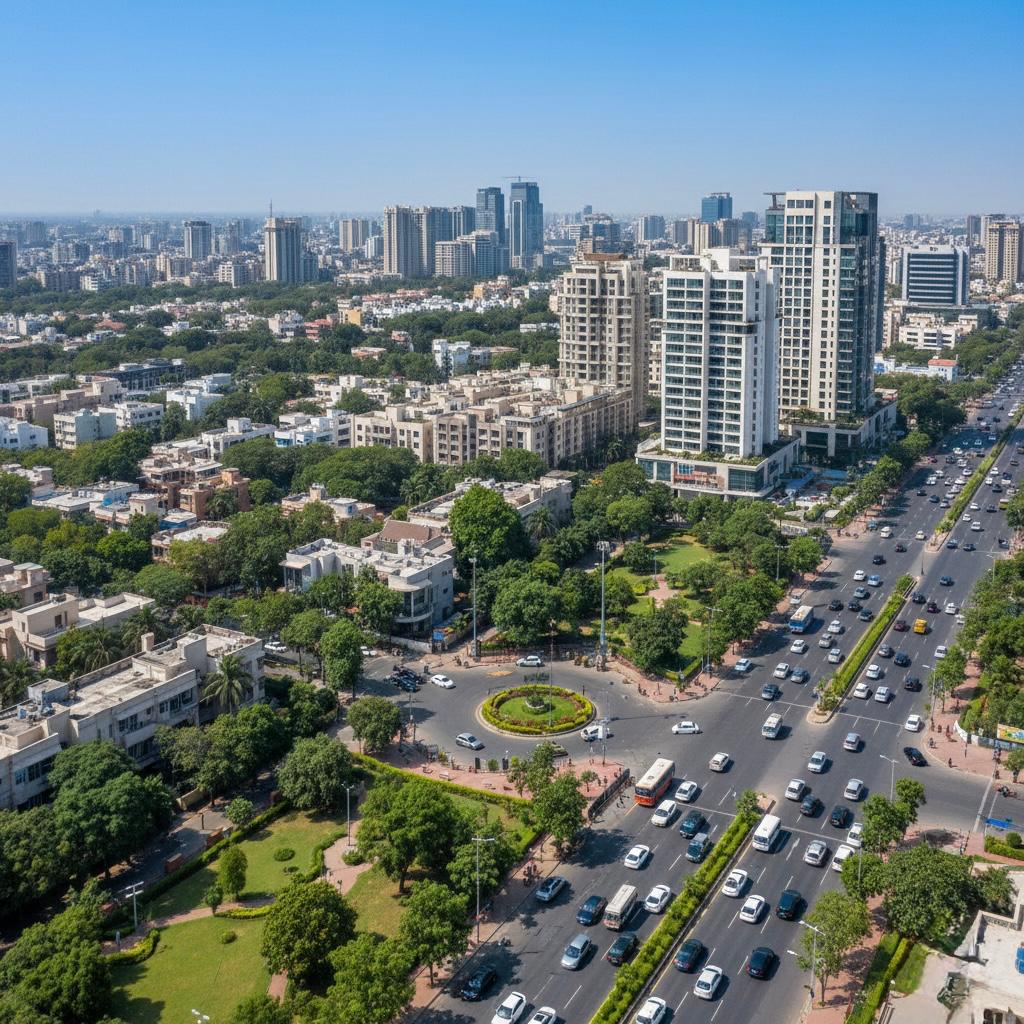
Delhi has always been different.
It’s never been a high-growth, high-risk real estate market. It’s not Gurugram with its speculative spikes. It’s not Noida with its project-heavy volatility.
Delhi is steady. Predictable. And for many investors, that’s exactly what makes it attractive.
But in 2026, the question isn’t just whether Delhi is safe. It’s whether it’s still the smartest choice — especially with so many alternatives emerging across NCR.
Let’s break it down honestly.
Delhi’s Real Estate Legacy: Stability Over Speculation
Delhi has always been a capital-preservation market, not a wealth-creation market.
What does that mean?
It means you buy in Delhi to protect your money, not to double it in three years. Appreciation is slow but consistent. Prices rarely crash, but they also rarely skyrocket.
The reason is simple: limited land availability.
Delhi’s boundaries are fixed. There’s no outward expansion. Every square foot is accounted for, which puts a natural floor under property values.
Add to that strong end-user demand — families, government employees, and working professionals who need housing in the capital — and you get a market that holds its value even during slowdowns.
This is why Delhi property investment 2026 still makes sense for a specific type of buyer: someone looking for stability, not aggressive returns.
If you’re investing for the long term, if you want an asset that won’t lose value, Delhi remains a safe bet.
But safe doesn’t always mean optimal.
Rental Demand That Keeps Delhi Relevant
One of Delhi’s biggest strengths? Rental demand that never really dips.
Government employees, PSU professionals, diplomats, and corporate executives need housing in the capital. And they’re willing to pay for well-located, well-maintained properties.
This keeps rental yields stable — typically in the 2–3% range for premium localities like South Delhi, Civil Lines, and Vasant Vihar.
It’s not the highest yield in NCR. But it’s consistent. Predictable. And backed by tenants with stable incomes and long lease durations.
For investors who value cash flow alongside appreciation, this reliability is hard to ignore.
The challenge, though, is that rental demand is concentrated in specific zones. Not every Delhi locality commands premium rent. And older properties often struggle to attract quality tenants unless they’ve been renovated.
So while Delhi’s rental market is strong, it’s also selective. Location and property condition matter more than ever.
Challenges Buyers Must Consider in 2026
Let’s talk about the friction points — because they’re real.
High entry prices are the first barrier. Delhi isn’t cheap. A 3 BHK in a decent South Delhi locality starts at ₹3–4 crore. In prime areas, it can go much higher.
For first-time buyers or mid-level investors, that’s a steep ask.
Older housing stock is another concern. Many properties in established Delhi neighborhoods are 20–40 years old. Layouts are dated. Maintenance is expensive. Parking is inadequate.
Yes, the location is great. But the product itself often doesn’t match modern living standards.
Then there’s congestion. Delhi’s infrastructure is mature, but it’s also stretched. Traffic is unpredictable. Roads are narrow. Finding parking is a daily struggle.
And because most of Delhi is already built up, there’s little scope for redevelopment or infrastructure upgrades in the near term.
For buyers used to the spaciousness and planning of newer NCR corridors, this can be a dealbreaker.
These aren’t reasons to avoid Delhi entirely. But there are reasons to be selective about where and what you buy.
The Rise of New-Age Investment Corridors Within Delhi
Here’s where things get interesting.
While traditional Delhi localities face these limitations, newer corridors are rewriting the script.
Take Dwarka Expressway, for example. Technically part of Delhi’s extended ecosystem, it offers everything traditional Delhi provides — connectivity, infrastructure, proximity to employment hubs — but without the congestion and outdated housing stock.
The expressway is fully operational. IGI Airport is 15–20 minutes away. Central Delhi and Gurugram are within 30–40 minutes.
And the housing itself is modern. Low-density gated communities. Larger floor plans. Better parking. Managed security. Green zones that aren’t just promises on paper.
This is attracting a new kind of buyer: professionals who want Delhi’s stability and connectivity, but prefer the lifestyle and infrastructure of a planned development.
Best areas to invest in Delhi in 2026 aren’t just the legacy zones anymore. They’re the corridors that combine Delhi’s strengths with modern planning and livability.
Developer confidence is visible here, too. Premium players like M3M are launching large-scale residential projects on Dwarka Expressway — a clear signal that the market has moved from speculative to operational.
For investors, this is important. It means you’re not betting on a future story. You’re buying into a live, functioning ecosystem.
Who Should Invest in Delhi in 2026
Is Delhi real estate a good investment?
The answer depends on your profile.
Long-term investors will find Delhi appealing. If you’re holding for 10+ years and prioritize capital preservation over rapid growth, Delhi’s stability is valuable.
End-users seeking a permanent home in the capital should absolutely consider Delhi — especially if social infrastructure, schools, and community matter more than modern amenities.
NRIs looking for a safe, low-maintenance asset will appreciate Delhi’s resilience. It’s not a high-return market, but it’s a low-risk one.
But if you’re a growth-focused investor looking for 12–15% annual appreciation, or if you want better rental yields and modern housing stock, then newer NCR corridors might serve you better.
Delhi isn’t for everyone in 2026. But for the right buyer, it’s still one of the safest bets in Indian real estate.
What About the Broader NCR Market?
It’s worth noting that Delhi NCR property market dynamics are shifting.
Gurugram offers higher growth but comes with execution risk and market volatility. Noida has improved significantly, but still carries a perception overhang.
Delhi, meanwhile, sits in the middle — lower growth than Gurugram, but far more stable. Less speculative than Noida, but also less modern.
For investors, the key is understanding what you’re optimizing for.
If you want safety and predictability, Delhi wins.
If you want growth and modern infrastructure, look at planned corridors within or adjacent to Delhi, like Dwarka Expressway or select Noida Extension pockets.
There’s no universal answer. Just the right answer for your goals.
Final Takeaway
Delhi isn’t losing relevance. But it’s no longer the default choice it once was.
In 2026, smart investing in Delhi means being selective. It means choosing corridors with infrastructure, avoiding outdated housing stock, and understanding that stability is the core value proposition — not explosive growth.
For the right buyer, Delhi remains a safe and sensible investment. But only if expectations are aligned with what the market actually delivers.
Every property investment depends on individual goals. If you’re evaluating opportunities in Delhi or across NCR and want clarity before making a decision, speak with our advisors for guidance tailored to your investment horizon.