
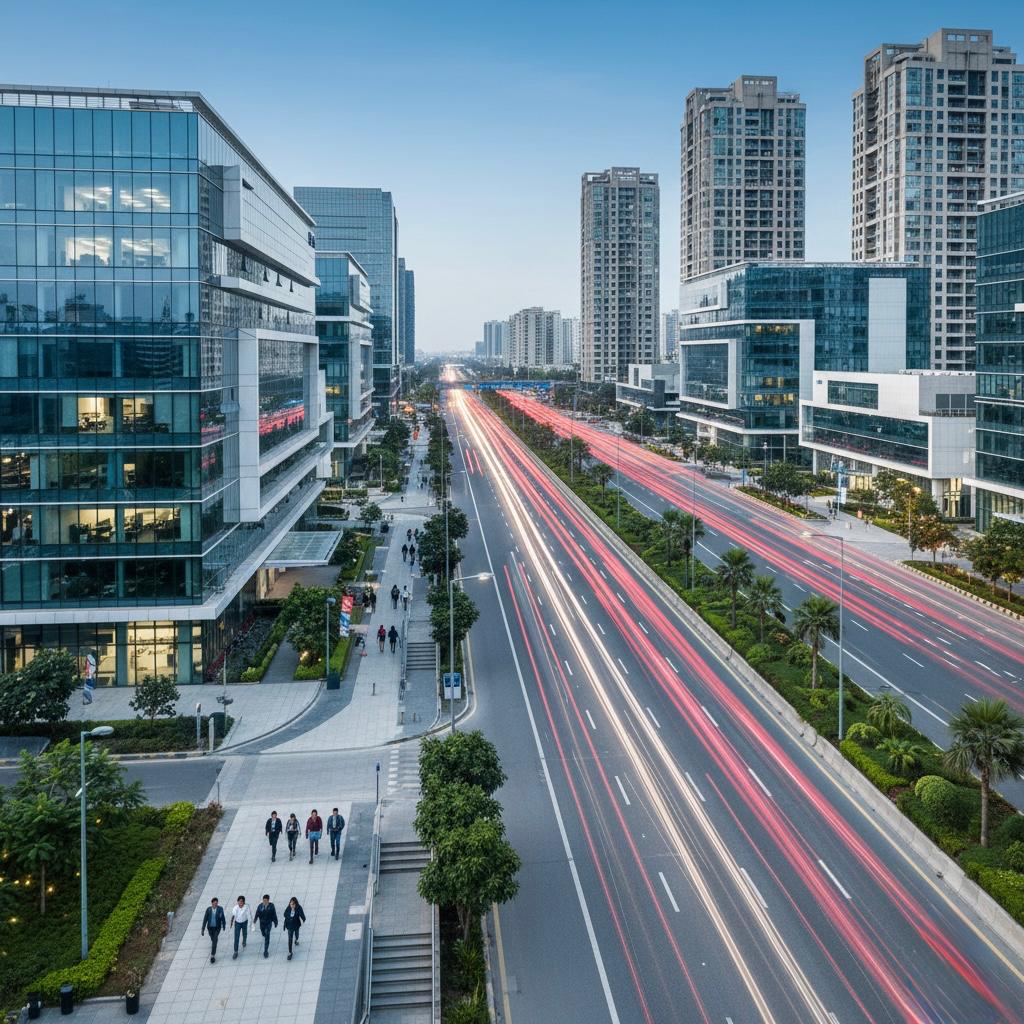
The Noida Expressway has quietly transformed into one of North India’s most dynamic business corridors. What was once just a connectivity route is now home to some of the country’s largest IT and corporate names.
If you’re wondering why this stretch has become so important, the answer lies in infrastructure, strategic location, and the kind of companies setting up base here.
The Corporate Giants Have Arrived
Walk along the Noida Expressway today, and you’ll see the offices of Infosys, TCS, Genpact, HCL, Samsung, and Adobe. These aren’t small branch offices—these are sprawling campuses employing thousands of professionals.
Infosys operates a major development center here. TCS has expanded its footprint significantly. Genpact, a global leader in business process management, has one of its key India operations based on this corridor.
When companies of this scale choose a location, it’s not random. It’s a calculated decision based on accessibility, talent availability, and long-term growth potential.
Why IT Companies Prefer Noida Expressway
Older business districts like Connaught Place or Gurgaon’s Cyber Hub were once the default choices. But they come with congestion, higher costs, and limited room for expansion.
Noida Expressway offers something different.
First, there’s space. Large IT firms need expansive campuses with room for future growth. The expressway corridor provides that in abundance.
Second, connectivity is unmatched. The expressway links directly to Greater Noida, Delhi, and the upcoming Jewar Airport. The Noida Metro’s Aqua Line runs parallel, making daily commutes easier for employees.
Third, the cost advantage is real. Office space here is more affordable than in Gurgaon or South Delhi, which matters when you’re leasing floors for hundreds or thousands of employees.
Infrastructure That Supports Growth
The Noida Expressway isn’t just a road—it’s a planned business ecosystem.
Special Economic Zones (SEZs) and office parks have been developed specifically to attract global corporations. These zones offer tax benefits, modern infrastructure, and a plug-and-play setup for companies looking to expand quickly.
The presence of metro connectivity, wide roads, uninterrupted power supply, and high-speed internet makes it a practical choice for IT operations that run 24/7.
And with the Jewar Airport coming up in the next few years, international connectivity will only get better. That’s a big deal for companies with global clients and teams.
Job Creation and What It Means for Real Estate
When a company like Infosys or TCS opens a campus, it doesn’t just bring jobs—it brings an entire workforce that needs housing, shopping, dining, and entertainment.
Thousands of professionals working on the expressway prefer to live nearby. Commuting two hours each way isn’t appealing when you can find a modern apartment within 10–15 minutes of your office.
This has led to strong residential demand in sectors close to the expressway.
Areas like Sector 128, Sector 137, and Sector 150 have seen a surge in housing projects. Developers like Max Estate, Gulshan, Eldeco, and Nirala Group have launched multiple residential towers catering to young professionals and families.
Jacob & Co. Residences is another example of premium housing designed for the corporate crowd. These aren’t just homes—they’re lifestyle spaces with gyms, coworking areas, and easy access to offices.
On the commercial side, developers like Bhutani have built retail and office complexes that cater to the daily needs of this growing population.
Rental Demand is Strong and Steady
For investors, the Noida Expressway story is interesting because of the rental yields.
With so many IT professionals working here, rental demand remains consistently high. A 2–3 BHK apartment near the expressway can command monthly rents between ₹25,000 to ₹50,000, depending on the project and amenities.
This isn’t speculative demand. It’s driven by real jobs, real salaries, and real people who need places to live.
And as more companies expand their operations, this demand is only expected to grow.
What’s Coming Next
The expressway corridor is far from fully developed. New office projects, hotels, and commercial hubs are in the pipeline.
Sector 142, Sector 143, and adjoining areas are being positioned as the next wave of development. As land closer to existing IT hubs gets costlier, expansion will naturally move outward.
The government has also been proactive. Road widening, flyovers, better signage, and improved public transport are all part of the plan to support this growth.
Why This Matters in 2026
By 2026, Noida Expressway is expected to solidify its position as a top-tier corporate destination in North India.
More companies will move in. More professionals will relocate. And the surrounding residential and commercial markets will continue to evolve.
For anyone looking to live near their workplace or invest in an area with long-term fundamentals, this corridor offers real opportunity.
It’s not about hype. It’s about companies, jobs, infrastructure, and demand—all coming together in one location.
If you’re planning to live or invest near Noida Expressway and want guidance on opportunities close to major IT hubs, speak with our advisors for a curated shortlist.